
Adolescence: When your teenage dog is too much to handle
Understanding and Managing Arousal
If you have ever lived with an adolescent dog, you may recognise this scenario. One minute you have a lovely, affectionate puppy who can listen, learn and generally behave beautifully. The next, they appear to have forgotten everything they have ever been taught. They are bouncing around the house, struggling to settle, grabbing things they shouldn't, barking at noises they previously ignored or becoming incredibly excited by visitors, other dogs or anything else that catches their attention.

Welcome to Adolescence!
It can be a challenging stage for both dogs and their humans, and one of the things I talk about a lot with owners of young dogs is arousal. Understanding what is happening beneath the behaviour can make a huge difference to how we approach this stage.
Arousal is essentially the level of activation of the nervous system. It isn't a bad thing in itself. We need arousal to respond to our environment, explore, play, learn and react to things that matter. The difficulty comes when arousal becomes too high. At that point, a dog can find it much harder to process information, control impulses and make sensible choices.
This can be particularly noticeable during adolescence. Puberty brings significant hormonal changes, while the brain is still developing. Research into adolescence more generally shows that systems involved in reward and emotional responses can become highly responsive before the systems involved in self-regulation and impulse control are fully mature. We should be careful about simply transferring human research onto dogs, as canine adolescence is still relatively understudied, but we do know that adolescence is an important period of hormonal, neurological and behavioural development in dogs.
So you can end up with a young dog who desperately wants to do something, but has considerably less ability to pause and think about whether they should.
“I REALLY WANT TO DO THIS!”
can temporarily be much louder than:
“Perhaps I should consider my options.”
And there is another important part of the picture:
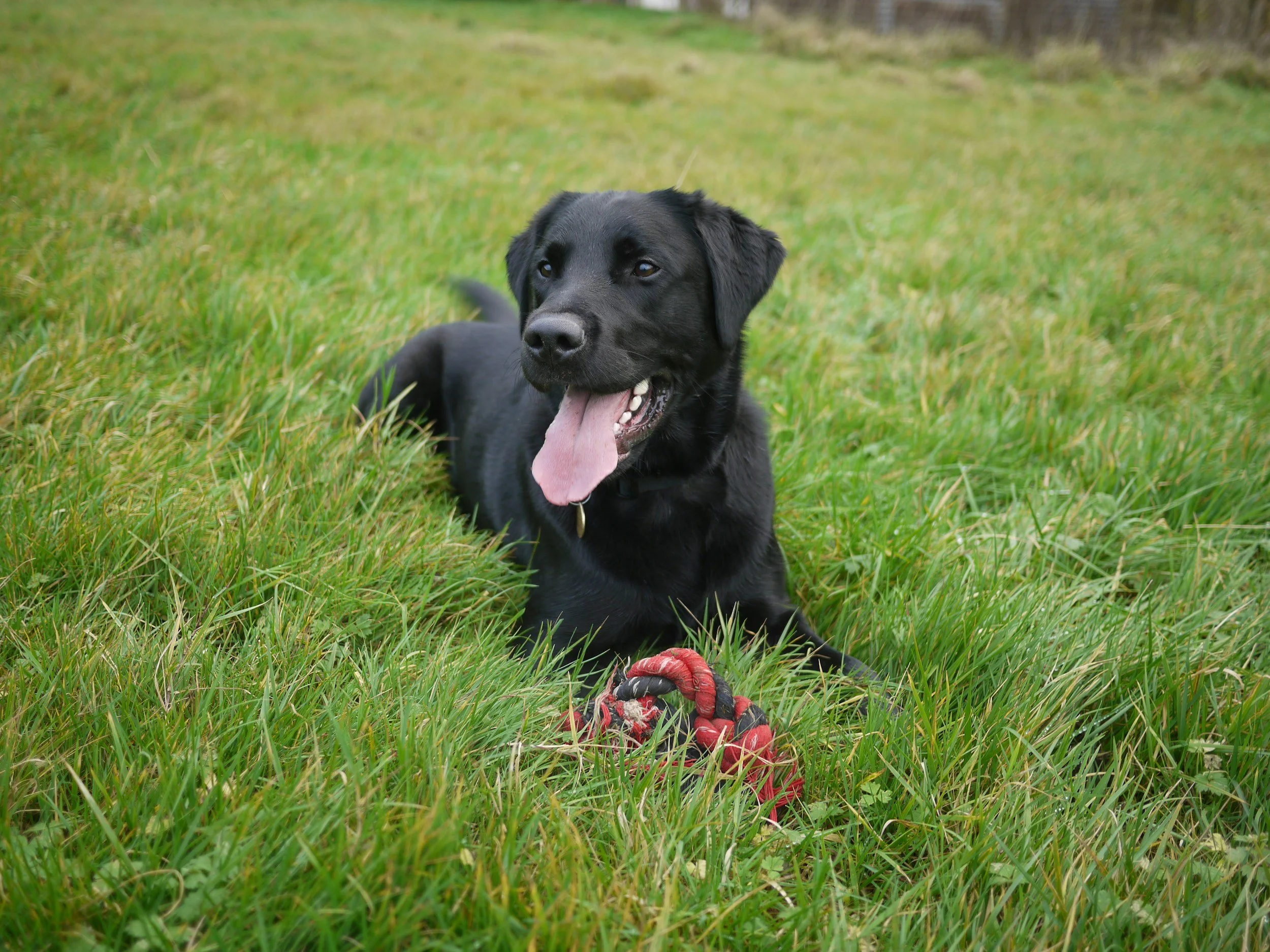
Excitement can become a habit.
If a young dog repeatedly rushes to the door, jumps all over visitors and becomes wildly excited when people arrive, they are getting lots of practice at being highly aroused around visitors. The same can happen with walks, other dogs, squirrels, chasing games, the garden, car journeys or the end of the working day.
This is why I don't particularly like the phrase, “They're just a teenager. They'll grow out of it.”
They may grow out of some of it. But they also need our help.
I recently worked with a young dog who was struggling particularly in the evenings. During the day he could appear perfectly capable, but as the evening progressed his arousal would gradually build. He became increasingly restless, struggled to settle and was much more likely to engage in unwanted behaviours towards his owner.
It would have been very easy to dismiss this as “teenage behaviour”. Instead, we looked at the bigger picture: his age and developmental stage, his need for appropriate outlets, his ability to settle and regulate himself, what was happening throughout the day and, importantly, how his humans were responding to him.
The aim wasn't to suppress the behaviour or expect him suddenly to behave like a mature adult dog. It was to help him develop the skills he was currently lacking.
This is where managing arousal becomes so important.
It is very understandable to think that an over-excited young dog simply needs more exercise. “If I give him a really long walk, he'll be exhausted.” Sometimes that helps. But sometimes it simply creates a very fit young dog who is extremely good at staying excited!
Young dogs need physical exercise, but they also need opportunities to sniff, explore, chew, rest, use their brains and, perhaps most importantly, learn how to come back down after excitement. Calmness is something we can actively support rather than something we simply expect to appear.
It is also worth looking at the whole day rather than just the behaviour you are seeing in front of you. A dog may cope perfectly well with one exciting event, but what happens when they have had a busy walk, a visitor, a trip in the car, a barking dog over the fence and a particularly exciting training session all in the same day?
By the evening, they may simply have very little emotional capacity left.
This is sometimes referred to as trigger stacking: several stimulating or emotionally significant experiences occurring without enough opportunity for the dog to recover between them. So rather than asking, “Why is my dog behaving like this tonight?”, it can be much more useful to ask, “What has happened today?”
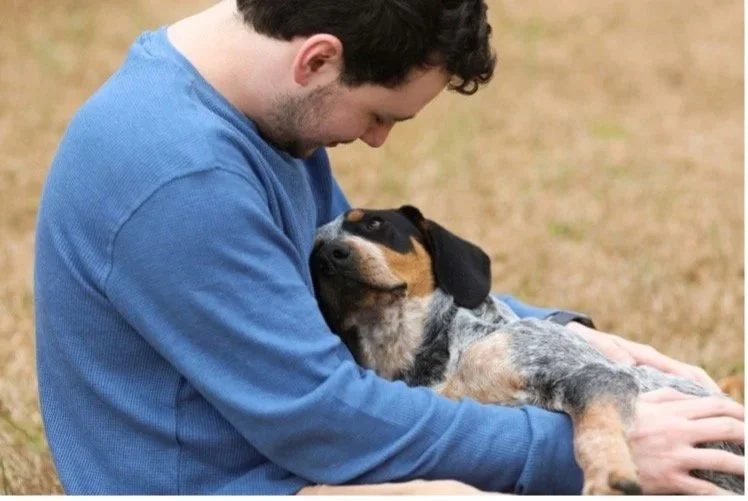
Managing an adolescent dog is also about managing our own expectations.
This can be one of the hardest things to do because you know they can do it. You've seen them do it. Your dog may have a beautiful recall in a quiet field and then appear to have completely forgotten their name when they spot another dog. They may settle beautifully on one evening and spend the next bouncing around the house.
This doesn't necessarily mean the training has disappeared. The emotional capacity to use those skills may simply be different from one situation to another.
And our own behaviour matters too. Living with a difficult adolescent dog can be exhausting, and staying calm when you've asked for the same thing ten times is easier said than done. But raised voices, repeated commands and increasingly frantic attempts to control a dog can add even more arousal to an already difficult situation.
This isn't about blaming owners. It is about recognising that we are part of the environment our dogs are responding to.
Sometimes the most helpful thing we can do is stop, take a breath, reduce the stimulation and give our dog some space. Management isn't giving in, and it isn't failing at training. Good management prevents a young dog from repeatedly rehearsing behaviours while we work on teaching them something different.
And that is really what we are trying to do during adolescence: build regulation rather than simply obedience.
Can your dog disengage from something exciting? Can they recover after a stimulating experience? Can they settle when nothing is happening? Can they cope with a little frustration? Can they move from excitement back towards calm?
These are important life skills, and they take time to develop.
So if you are currently living with an adolescent dog who seems to have developed a whole new personality, try not to panic. But don't simply assume that you have to wait for them to grow out of it either.
Adolescence is a developmental stage, and changes in behaviour are completely normal. But “normal” doesn't mean that nothing needs to be done. The experiences a young dog has, the behaviours they repeatedly practise and the way we respond to them can all help shape the adult dog they become.
Be patient. Be consistent. Be kind. Give your dog appropriate outlets, plenty of opportunities to decompress and realistic expectations. And if you are struggling to understand what is happening, getting support from a qualified behaviourist can be incredibly helpful.
Your adolescent dog isn't the finished article yet. They are learning how to navigate the world while their brain and body are still developing.
Our job isn't simply to wait for them to grow up.
Our job is to help them get there.
With the right support, patience and guidance, that exuberant, chaotic teenager can grow into a confident, emotionally balanced adult dog who is a wonderful companion.